
By Thomas P. Caldwell
For the New Hampshire Veterans Association, founded by Civil War veterans in 1875 and based at Weirs Beach in Laconia, 2026 is an important year. This year marks the launch of a $2 million campaign designed to restore and maintain the historic buildings on and adjacent to Lakeside Avenue, as well as to improve the infrastructure and campgrounds that welcome tents, trailers, and motor homes each summer.
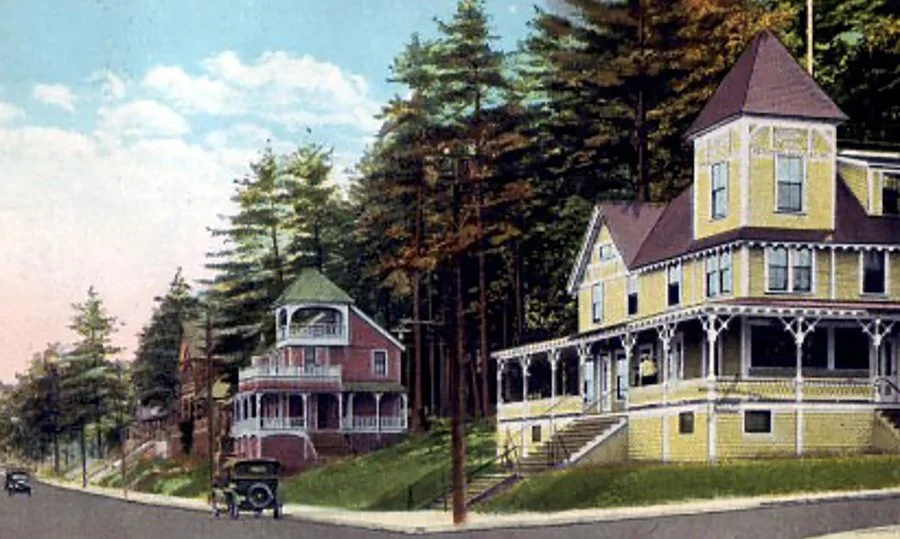
The NHBA property includes Victorian cottages, built over time, to accommodate generations of veterans who returned for remembrances, fellowship, and support.
The restoration efforts include repairing foundations, replacing windows and roofs, improving utilities, and upgrading the property for continued accommodation of veteran events and community gatherings.
In announcing the fundraiser, the NHVA stated, “The goal is simple: to preserve a living piece of New Hampshire’s veteran heritage, while ensuring the site remains safe and welcoming for future generations. Supporting the NHVA Preservation Fund means preserving history, honoring service, and strengthening the veteran community across New Hampshire.
The NH Veterans Association was formed in Manchester in 1875 to allow Civil War veterans to meet and renew acquaintances. Three years later, the first NHVA encampment took place at The Weirs.
To support the organization and see that it had plenty of space for members to get together, the Boston-Concord-Montreal Railroad made land available on a hillside overlooking Lake Winnipesaukee in 1879, signing a 43-year agreement. The railroad prepared the property by clearing trees, grading some roadways, and building a dancing pavilion at the southern end of “the grove”. The land offered scenic views of the lake and a quiet place to camp.
At that time, members stayed in tents along streets parallel to Lakeside Avenue. Larger tents served as headquarters and kitchen facilities.
The NHVA erected the Lowell Building at the top of New Hampshire Avenue in 1880, with the first floor serving as an open reception area. The second floor was a dormitory.
In 1881, the NHVA was incorporated, and the NH Legislature supported additional housing, appropriating money for five barracks at the top of the grove. New headquarters were built next to the Lowell Building.
Seating areas in the hillside grove area, with a speaker’s stand and pavilion, were built in 1882. That year, the NHVA also created the Woodbury Sanborn Memorial, a stone honoring the “sutler” — a civilian purveyor of food, liquor, and other comfort items to the 12th Regiment — and began planning for new headquarters and a dining pavilion.
Next came the Fifth Regiment building, built next to the Lowell Building in 1883. The first floor had a large reception area, with a partitioned sleeping area on the second floor. Individual regiment associations began to make plans to construct their own buildings on plots allocated to them.
Two years later, in 1885 — 10 years after the formation of the NHVA — the Seventh Regiment building was completed on Lakeside Avenue, with a large reception area on the first floor and several sleeping areas and a ladies’ reception room on the second floor. The new headquarters building was completed, with large meeting rooms and offices on the first floor, a large meeting room with smaller rooms on the second floor, and a dormitory and storage area on the third floor. Another building served the Third Regiment, with the First Band utilizing one-third of the building.
In the years that followed, the Second Regiment Building and Manchester House were completed (1886); the 16th Regiment Building and First Cavalry Building were added (1887); the Ninth and 11th Regiments Building and 15th Regiment Building were next (1888); followed by the National Veterans Association of New Hampshire Building (1891); the 14th Regiment Building (1893); and the Berdan’s Sharpshooters and Heavy Artillery Companies Building (1906).
Images of America-The Weirs by historian Warren D. Huse recorded that the NH Veterans Association properties comprised about 17 buildings in all, on Lakeside Avenue, Main Street, and Veterans Avenue.
President Theodore Roosevelt attended the 26th annual reunion in 1902, with between 20,000 and 40,000 people attending to hear him speak on Aug. 28. The area was decorated with bunting and flags and the lake was filled with steamboats and other vessels.
The NHVA was among the victims of a large fire that destroyed the Weirs Hotel in 1924. The spreading fire burned the Third Regiment building and damaged other barracks.
Another catastrophe struck when the Hurricane of 1938 swept through the area, toppling more than 200 trees and destroying the Eighth and Thirteenth Regiment building, the National Veterans Association Building, the speaker’s stand, the convention pavilion, and other structures; while other buildings sustained damage.
In later years, there were other fires, some of them of suspicious origin. The NHVA undertook repairs and did landscaping in the wake of those years of damage.
Today the NHVA rents cottages, as well as tent and trailer sites, to members who served in the New Hampshire Units or Regiments, or in any other branches of the United States armed services who now are residents of New Hampshire, including those who served in the Army, Navy, Marine Corps, Air Force, Coast Guard, and Nurse Corps.
On its website, the NHVA states, “This Association has the unique responsibility for maintaining the reservation, artifacts, and records passed down to us by the New Hampshire Union Veterans of the Civil War. New Hampshire contributed 21 Regiments and 5 separate Companies, plus further unassigned volunteers to the Union Army in that war. Succeeding veterans and veterans’ organizations have maintained the reservation, and added further artifacts and records from all the conflicts since the Civil War to our collection. Our organization will continue to recruit all eligible veterans to assist us in the task of preserving our legacy, and educating the public as to the extraordinary effort that the ordinary soldiers have made to preserve our union, our country, and our way of life.”
Members meet at The Weirs during June and August, and in Concord during November and April. The annual encampment and reunion happens each August, with the association’s annual meeting taking place on the second Saturday of August.
Associated with the organization is the New Hampshire Veterans Association Auxiliary, which includes immediate family members (parents, spouse, siblings, and children 18 and older who are New Hampshire residents). It also offers a memorial membership for the immediate family of a New Hampshire serviceman who has fallen in battle within the preceding two years.
To support the $2 million Preservation Fund campaign, go to the New Hampshire Veterans Association website at https://nhva.site/fundraising-campaign.