
The Rich Tradition of Historic Inns in New England
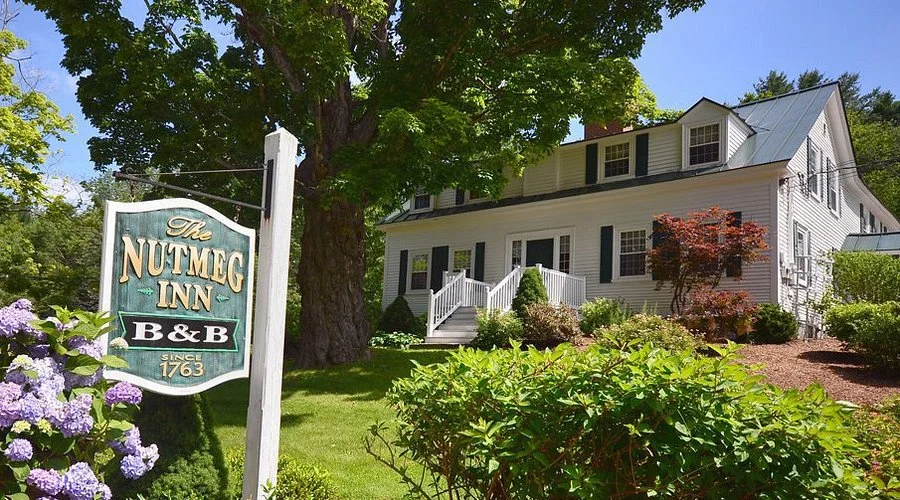
The Nutmeg Inn in Meredith is a mid-18th-century homestead listed on the New Hampshire State Register of Historic Places.
By Mark Okrant
Historic inns have a rich tradition stretching back more than 2,000 years. They evolved from simple roadside shelters into elegant destinations that reflect the changing ways people traveled. Earliest inns appeared in the ancient civilizations of the Middle East, Greece, and Rome. Travelers, merchants, government officials, and soldiers needed safe places to rest. Along the Roman Empire’s extensive road network, roadside inns — known as mansiones and mutationes — provided lodging, food, fresh horses, and repairs for travelers. As most of us learned years ago, Joseph and Mary were told, “There’s no room at the inn.” This would have been a frequent circumstance along more popular routes, as the inns during that time were frequently full. Some innkeepers offered an open lower level or stable to those who were desperate for shelter.
After the fall of Rome, monasteries often offered hospitality to pilgrims. By the Middle Ages, privately owned inns became common throughout Europe. These establishments typically featured shared sleeping rooms, a communal dining hall, stables for horses, basic meals, and ale or wine to drink. Many medieval inns were located along pilgrimage routes, including those leading to Santiago de Compostela and Canterbury.
As stagecoach travel expanded during the 16th through 18th centuries, coaching inns became essential stops. Every 10 to 20 miles, travelers could change horses, eat a hot meal, spend the night, exchange news, and/or conduct business. These inns became important social and commercial centers. Wealthier travelers could rent private rooms, while others slept in shared accommodations.
In colonial America, inns and taverns served multiple purposes. Besides providing lodging, they often functioned as restaurants, post offices, courtrooms, town meeting places, and centers for political discussion. Several famous colonial inns hosted notable figures such as George Washington and Benjamin Franklin.
Upon entering the 19th century, railroads changed travel dramatically. Rather than seek out inns and taverns, travelers increasingly stayed near train stations or at luxurious grand hotels that offered architectural opulence, fine dining, and recreational activities. Many small roadside inns declined during this period.
The rise of automobiles in the early 20th century changed the travel landscape considerably, as many country inns were given new life. Americans began taking leisure road trips, and historic inns became popular for their charm and personal service. After the 1920s, motels provided very strong competition. However, some inns were able to compete with motels by emphasizing historic architecture, fine dining, personalized hospitality, scenic locations, and by featuring local history.
As we are now fully into the 21st century, many historic inns still operate in buildings that are 100 to 300 years old. Guests who prefer historic inns are drawn to those properties that preserve original features such as hand-hewn beams, wide-plank floors, large fireplaces, antique furnishings, and original period architecture. All in all, many guests choose historic inns because they offer an “experience” rather than simply a place to sleep.
We live in a part of the country that is imbued with pre-colonial and colonial tradition. New England has one of the nation’s richest collections of historic inns, many dating to the 1700s and early 1800s. Some notable examples include:
The Publick House Historic Inn, opened in Sturbridge, MA, in 1771
The Red Lion Inn, opened in Stockbridge, MA, in 1773
The Norwich Inn, opened in Norwich, CT, in 1797
These inns continue to combine hospitality with local history, allowing guests to experience buildings and traditions that have welcomed travelers for generations.
Here in New Hampshire, we have dozens of historic inns, many operating in buildings dating from the 18th and 19th centuries. What follows is a list of some of the state’s most notable historic inns that continue to welcome guests today:
The Inn at Hancock (in Hancock) was established in 1789. It is widely recognized as New Hampshire’s oldest continuously operating inn. After an extensive restoration, it recently reopened in 2026 with updated accommodations while preserving its historic character.
New London Inn (in New London) was established in 1792. This village landmark has served travelers for more than two centuries and remains a popular destination near Mount Kearsarge.
The Wentworth (in Jackson) was opened in 1869. This classic White Mountains country inn is known for its Victorian charm and mountain setting.
Colonel Spencer Inn (in Campton) was built in 1764. This restored colonial home offers an authentic historic New England bed-and-breakfast experience.
Highland Lake Inn (in Andover) originally was constructed in 1767. Described as a gentleman’s farmhouse, it has been converted into a historic inn overlooking Highland Lake.
Inn by the Bandstand (in Exeter) is located in an elegant 1809 Federal-style mansion, just steps from Exeter’s historic downtown.
Pickering House Lake Winnipesaukee (in Wolfeboro). This restored early-1800s landmark offers luxury accommodations in America’s oldest summer resort.
The Nutmeg Inn (in Meredith) is a mid-18th-century homestead listed on the New Hampshire State Register of Historic Places.
Follansbee Inn (in North Sutton). This lakeside historic inn features antiques, original artwork, and classic New England hospitality.
Black Swan Inn (in Tilton) is a Victorian mansion transformed into an elegant bed-and-breakfast.
The Mulburn Inn in (Bethlehem) is a beautifully restored historic White Mountains inn known for preserving its original architecture.
Ballard House Inn (in Meredith) – This was a late-1700s home, still offering period charm near Lake Winnipesaukee.
The Federal House Inn (in Plymouth) is a carefully restored historic home between the Lakes Region and White Mountains.
The Inn at Jackson (in Jackson) is a romantic adults-only inn with 19th-century character.
This writer has had the good fortune of sharing a long friendship with the previous owners of Inn on Golden Pond (in Holderness). Built in 1879 as a private family home by the Sargent family, they began renting out extra bedrooms during the summer, once their children were grown. Originally called The Catalpas after three large trees in the front yard, the inn has retained much of its 19th-century character. My friends, who owned the inn from 1984 to 2020, took enormous pride in their role as stewards of a piece of the region’s history. One can easily surmise that previous and current owners of each of the historic inns share a similar level of responsibility to provide a high level of hospitality while maintaining the character of the properties themselves.