
Maple Sugaring Can Be A Joyful Family Undertaking
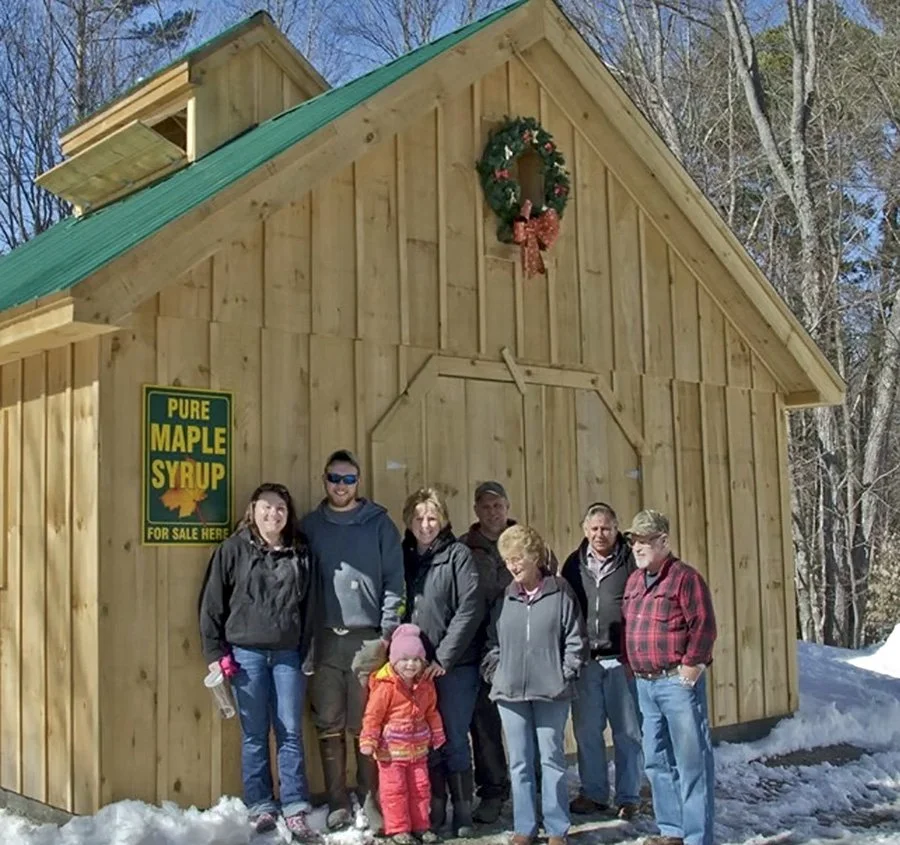
The Eldridge Family Sugar House in Tamworth makes maple syrup production a family affair. (Courtesy Photo)
By Thomas P. Caldwell
Maple sugaring season can begin any time after the middle of February, and area sugar houses have been gearing up for the long days (and sometimes nights) ahead. The sugaring process can require the full attention of producers for the limited time that sap is running, and while it can be fun, it can be time-consuming, and approaching it as a family lightens the workload and strengthens family ties.
Indeed, many sugaring operations are multi-generational labors of love, with family members becoming involved while they are young and carrying on the tradition throughout their lives.
Windswept Maples (https://www.windsweptmaples.com/) in Loudon is such an operation. Eight generations of the Moore family have raised animals, grown crops, and continued “the sweet New England tradition of making pure maple syrup” at 845 Loudon Ridge Road. (Call 603-435-4003 ahead of time if you plan to visit, to make sure someone is around.)
It is never too late to begin those family traditions. Eldridge Family Sugar House (https://www.eldridgefamilysugarhouse.net/) at 58 Cleveland Hill Road in Tamworth began its sugaring operation with a custom-built barrel stove in the back yard in 2015. What began as a hobby grew into a serious family operation after the father-and-son duo of Scott and Brandon Eldridge built a sap house in 2016. By 2020, they had a new establishment with new products, and are considering extending their sales into the Tamworth Lyceum.
The Eldridges are offering a Maple Sugaring Tour on Thursday, March 5, and with sugar houses across the state will be participating in NH Maple Weekend on March 21-22.
Walker’s Sugar House (https://www.facebook.com/walkerssugarhouse/), at 2760 Smith River Road, Bristol, has been a family-owned and -operated business since 2003, although earlier generations had limited sugaring operations. Jeff and Jason Walker who operate the business welcome people who want to visit the sugar house while they are boiling sap.
Big Lake Maple (https://www.biglakemaple.com/), at 31 Richards Road in Wolfeboro, was founded in 2015 as a small winter project by Kenneth St. Pierre, in his parents’ back yard. With his father, Marc, he collected sap in milk jugs and boiled it over turkey fryers. Moving on to altered oil drums and finally to a Smoky Lake Maple Evaporator, Ken has become a passionate maple sugar maker.
Back in 2000, the Jessie James Maple Farm (https://jessiejamesmaple.com/) at 164 Allens Mill Road, Gilmanton, began operating as a labor of love. While they do not have regular hours, they sell their maple products online and outlets such as Lakes Region Party and Gifts, Gilmanton’s Own Market, The Country Store, Vista Foods, and Lakeshore Market & Deli.
A full list of New Hampshire maple producers is listed at https://nhmapleproducers.com.
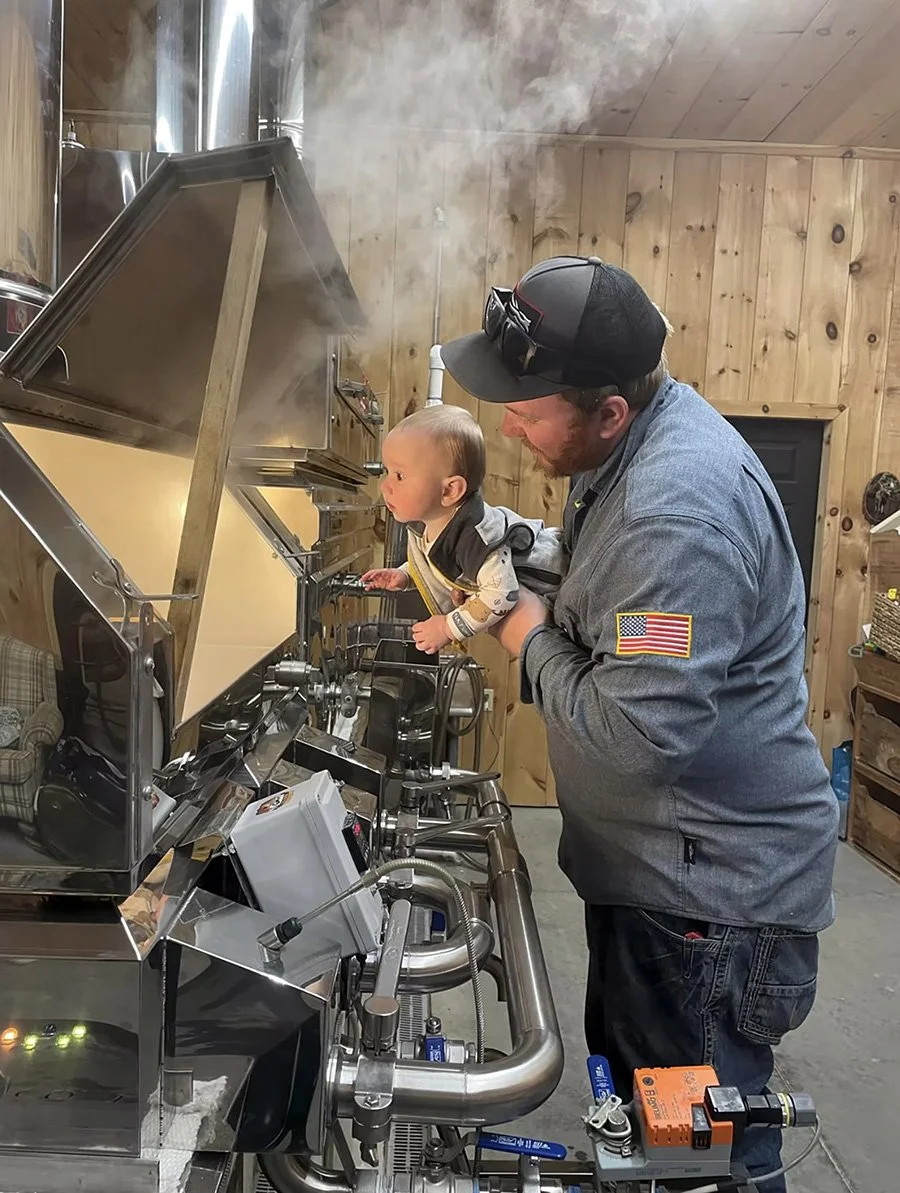
One is never too young to learn about making maple syrup. (Courtesy Photo)
How It’s Done
The process of producing maple syrup begins the same way, no matter how the final product is made. It starts with drilling a tap hole into a maple tree and inserting a spout. A tree needs to be about 40 years old, or 10-12 inches in diameter, to be suitable.
Knowing when to tap is part experience and part guesswork. With climate change, maple season has been starting earlier than in years past: The rule of thumb used to be that sap would run around town meeting day in March. In the last 50 years, that has moved up to mid-February.
Sugar-makers want to tap just before the sap begins flowing to optimize their yield, but tapping too early can lead the tap to dry out as microorganisms build up and plug the hole. Tapping too late, they will miss the first valuable sap runs, which occur when nights are below freezing and the temperature reaches at least 40 degrees during the day, causing pressure to build up.
The sap flows into the bucket or bag attached to the spout, or into tubing that carries the sap to a central collection area, usually a large collection tank at the sugar house. It may move by gravity or rely on a vacuum pump.
Old-time maple producers transferred the sap directly from the storage tank into an evaporator, and, in order to process as much as possible in the short time the sap is running, it was not unusual to continue boiling all night.
Today, many sugar-makers first put the sap through a reverse osmosis machine to remove some the water before boiling. That shortens the boiling time by 60 to 70 percent, for a lot less time spent in the sugarhouse.
It takes an average of 40 gallons of sap to make a single gallon of maple syrup with a 2 percent sugar content. That rule of thumb is becoming less useful as a changing climate affects the sugar content in the sap. With rising temperatures, sap begins flowing to the branches, and trees are able to store less sugar. That means it will take more sap and more boiling to make the same product.
Most sugar houses place sap in stainless steel pans over the heat source, which may be wood, oil, wood chips, or wood pellets. As the water in the sap evaporates, the sap thickens.
The color and taste of maple syrup are affected by several factors, but generally the first runs of the season produce Grade A Golden Delicate syrup with its light, golden color with a mild, delicate taste. In addition to use as a table syrup, it suitable for maple cream, candy, and maple sugar.
As the season progresses, the sap produces a darker syrup, Grade A Amber Rich. It has the classic maple syrup flavor for pancakes, ice cream, and oatmeal.
Toward the end of the season, which generally runs for four to six weeks, the syrup darkens to Grade A Dark Robust with a more pronounced maple flavor. That is the grade most used for cooking, but some producers make Grade A Very Dark syrup at the end of the season, which offers an even richer maple flavor for cooking.