
Earth Day 2026: What You Can Do For The Environment
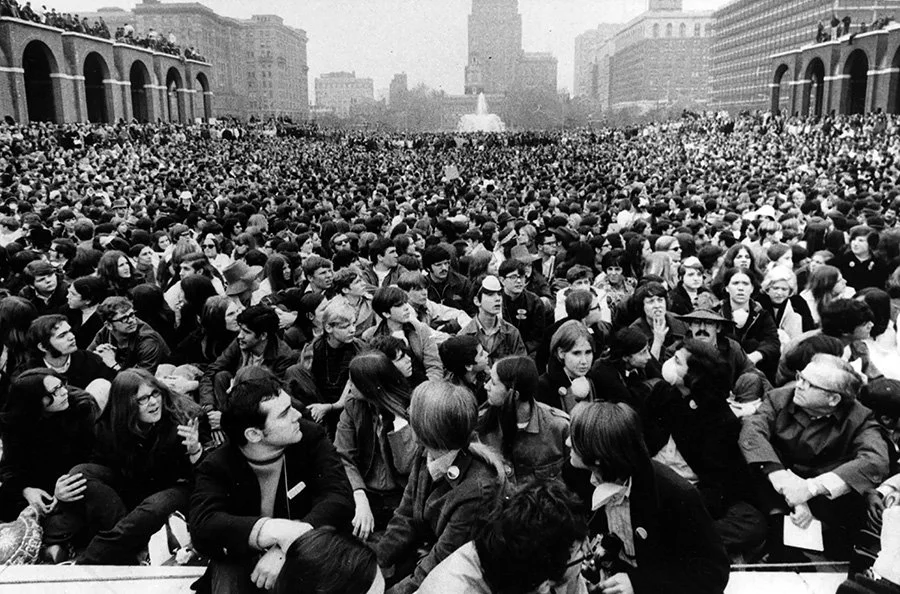
Roughly 7,000 people gathered on April 21, 1970, at Independence Hall in Philadelphia as the city celebrated an entire Earth Week, organized by graduate students from the University of Pennsylvania’s design departments. Ralph Nader gave a keynote address and the cast of “Hair” sang “Air” and “Let the Sunshine In.” (AP/Shutterstock)
By Thomas P. Caldwell
Tuesday, April 22, will mark the 56th anniversary of Earth Day, which some people trace back to the publication of Rachel Carson’s Silent Spring in 1962. The book, which sold more than 500,000 copies in 24 countries, raised public awareness of how industrialization had led to pollution that was harming living organisms and the environment.
Carson was a marine biologist and writer with the US Fish and Wildlife Service and her book exposed how the widespread use of DDT and other long-lasting weed-control chemicals was not only harming wildlife and habitat, but also clearly endangering human life.
“There would be no peace for me,” she wrote, “if I kept silent.”
Despite the book’s acclaim and the issues it exposed, it was not until 1970 that the environmental movement took off, and that was prompted by Senator Gaylord Nelson of Wisconsin witnessing the results of a massive oil spill off the coast of Santa Barbara, California, in 1969. Nelson proposed a college campus teach-in about pollution and the environment and persuaded Denis Hayes, a young activist, to organize the campus events. Nelson also enlisted Congressman Pete McCloskey to assist in spreading the message. They chose the date of April 22, falling between Spring Break and Final Exams, to launch the effort that became Earth Day.
Twenty million Americans — 10 percent of the US population — took part in demonstrations against the impacts of 150 years of industrial development in that first year.
Pete Townsend of The Who expressed disappointment that his generation had not followed through as forcefully in cleaning up the environment, and, despite concerns about climate change, Earth Day participation has fallen in recent years. Instead of becoming a broad national coalition, Earth Day is observed through individual initiatives by conservation commissions, students, and environmental groups.
In the Lakes Region, the First Congressional Church, UCC, of Wolfeboro will observe Eco Sunday on April 19, with Reverend Kendra Ford presenting “350nh and No Coal No Gas” at the church’s 10 a.m. service. That will be followed by an EcoFair from 11:15 a.m. - 12:30 p.m., with nonprofits advocating for earth stewardship. The church, located at 115 South Main Street, will serve a light lunch.
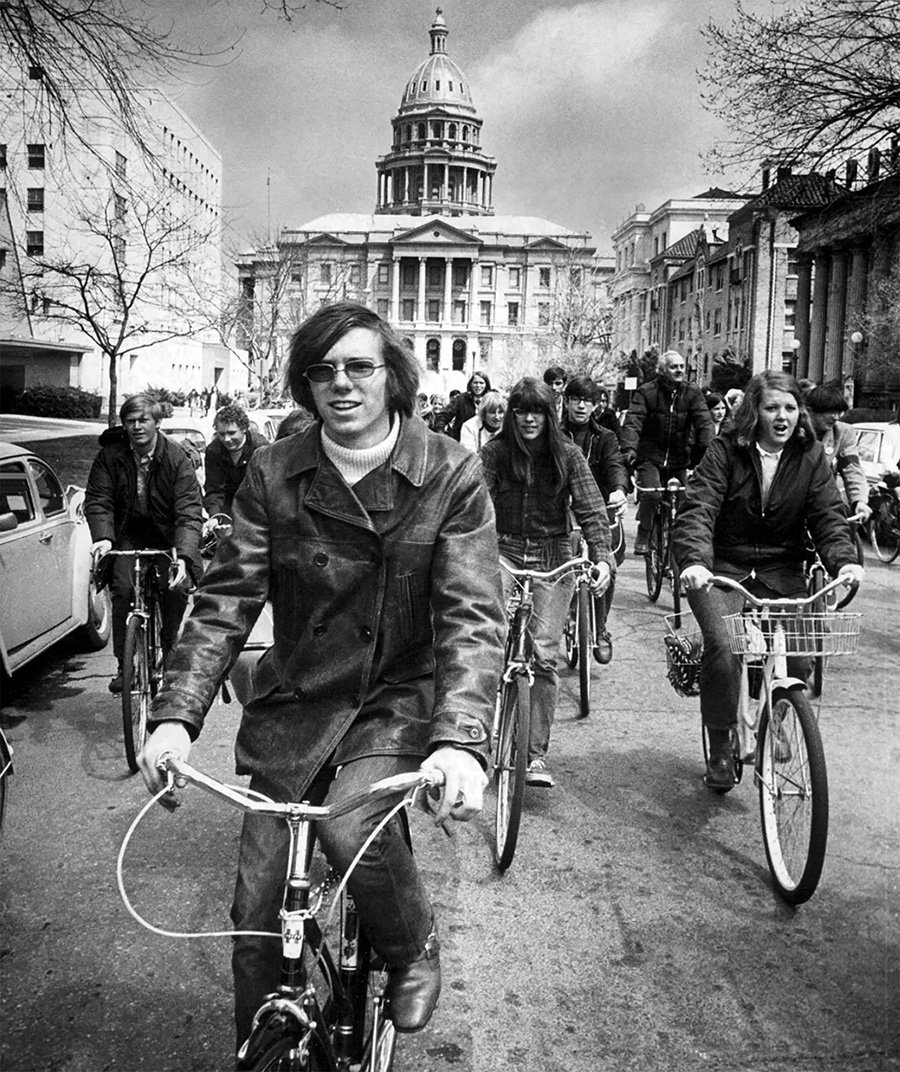
Peter Cohen of the University of Colorado leads the Earth Day “Bike Hike” from Boulder to Denver in 1970, picking up participants along the way. By the time they arrived at Currigan Hall, there were 260 riders joining hundreds of other participants in a 12-hour environmental teach-in. (Duane Howell/Denver Post/Getty Images)
Moulton Farm of Meredith is marking Earth Day by giving away free flowering seedlings to those visiting on April 22, while supplies last.
“Another way to celebrate is to have at least one part of a meal that day include an item from our farm or another local farm,” they say on their website, www.moultonfarm.com.
Last year, the City of Laconia observed Love Our Earth Day, but while reviving the event has been discussed, as of the end of March, there had been no formal announcement that it will take place this year.
The Squam Lakes Association in Holderness, however, has announced a “casual event” taking place on April 22 from 8 to 9:30 p.m., with a bonfire, s’mores, and stargazing.
“This casual event will focus on appreciation for Earth and the natural world by sharing personal experiences. The group will also be viewing the Lyrids meteor shower, a spring stargazing spectacle with upward of 15 - 20 comets an hour,” the association announced. “To finish off the evening, the group will be making s’mores to be served with hot chocolate.”
For more information or to sign up, visit squamlakes.org or call 603-968-7336.
The Pasquaney Garden Club and New Hampton Garden Club will jointly sponsor a “Container Gardening Talk and Demonstration” on Tuesday, April 21, from 6 to 7:30 p.m. at the Minot-Sleeper Library in Bristol. Ruth Droescher, Advanced Master Gardener with the UNH Cooperative Extension, will lead the program, talking about the benefits and drawbacks of gardening in containers. She will discuss the different types of containers and how to select the proper size and type, as well as the proper way to assemble a container garden.
Environmental Challenges
One of New Hampshire’s pressing environmental challenges is the potential for pollution from solid waste landfill sites. The state legislature has proposed several bills over the last several years to limit where landfills are located and to promote recycling, but the bills have been weakened or defeated, leaving it to local groups to work on reducing trash.
The Lakes Region Planning Commission has received an $87,300 USDA Composting and Food Waste Reduction grant to launch the area’s first Food Waste Composting Pilot Program which will establish two large-scale food waste composting sites. The program also will provide 160 free composting tumblers to help households launch home compost measures. Surveys will help to measure the program’s effectiveness, keeping track of the amount of food‑waste composting and the quality of the trainings, while tracking landfill diversion.
Even without formal programs, individuals can take their own steps to help the environment. By following the three Rs — reduce, reuse, and recycle — everyone can conserve natural resources and preserve landfill space.
Other options? Volunteer for community cleanups, which also help to protect your watershed.
Seek ecological knowledge and help others understand the importance and value of natural resources.
Conserve water, which avoids overtaxing the aquifers and produces less runoff and wastewater entering the waterways and ending up polluting the ocean.
Learn how to make smart seafood choices at www.fishwatch.gov.
Shop wisely, looking for packaging that uses less plastic, and bring a reusable shopping bag.
Switch to energy-efficient and long-lasting light bulbs, which reduce greenhouse gas emissions. Try to turn off lights when you will be out of a room for more than 15 minutes.
Plant a tree, which helps to combat climate change by providing oxygen that cleans the air, while providing shade to reduce the need for air conditioning, with some species providing fruit that reduces the need for purchases at the grocery store.
Choose non-toxic chemicals for cleaning and use at the office.
Drive less, not only because of rising gasoline prices, but also to reduce pollution. When possible, use a bicycle, which is eco-friendly and provides the exercise we all need.
Earth Day is not confined to one day; it is something to be observed all year long.